
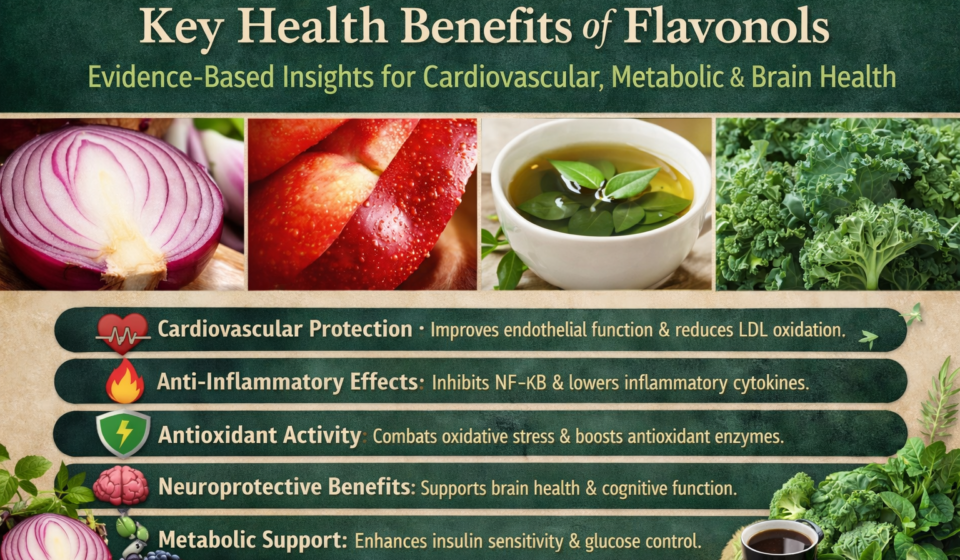

Flavonols are a biologically active subclass of flavonoids widely distributed in plant-based foods. Structurally defined by the presence of a 3-hydroxyl (3-OH) group on the C-ring, flavonols include well-studied compounds such as quercetin, kaempferol, myricetin, and isorhamnetin.
Growing epidemiologic and mechanistic evidence links regular dietary intake of flavonols with cardiovascular protection, improved metabolic regulation, reduced inflammation, neuroprotection, and potential anticancer effects.
Unlike single-target micronutrients, flavonols exert pleiotropic actions, influencing endothelial function, oxidative stress pathways, inflammatory cascades, immune modulation, and cellular signaling networks involved in chronic disease.
What Are Flavonols?
Flavonols belong to the broader flavonoid family of polyphenols. They are:
Naturally occurring in fruits, vegetables, tea, and plant-derived beverages
Usually present in foods as glycosides (sugar-bound forms)
Poorly water-soluble in their aglycone form
Metabolized by intestinal enzymes and gut microbiota into bioactive metabolites
Their biological activity depends not only on intake but also on gut microbial composition and overall dietary pattern.
1. Cardiovascular Protection
Cardiovascular disease remains the leading cause of global mortality. Flavonols demonstrate clinically meaningful cardioprotective effects through multiple mechanisms:
Endothelial Function
Enhance nitric oxide bioavailability
Improve vasodilation
Support vascular elasticity
LDL Oxidation
Reduce oxidative modification of LDL cholesterol
Slow progression of atherosclerotic plaque
Blood Pressure
Modest reduction via nitric oxide–mediated vasodilation
Mortality Data
Observational studies consistently associate higher flavonol intake with:
Lower coronary artery disease risk
Reduced cardiovascular mortality
Importantly, flavonols primarily reduce LDL oxidation, rather than significantly lowering LDL levels.
2. Anti-Inflammatory Effects
Chronic low-grade inflammation drives metabolic syndrome, atherosclerosis, arthritis, and neurodegeneration.
Flavonols inhibit key inflammatory pathways:
Suppression of NF-κB signaling
Downregulation of COX-2 and iNOS
Reduction of cytokines such as:
TNF-α
IL-6
C-reactive protein (CRP)
This makes flavonol-rich diets particularly relevant in cardiometabolic and inflammatory disorders.
3. Antioxidant Activity
Flavonols provide dual antioxidant protection:
Direct Action
Free radical scavenging
Indirect Action
Upregulation of endogenous antioxidant enzymes:
Superoxide dismutase (SOD)
Catalase
Glutathione peroxidase
This reduces oxidative injury to lipids, proteins, vascular endothelium, and neuronal tissue.
4. Neuroprotective & Cognitive Benefits
Certain flavonol metabolites, especially quercetin derivatives, cross the blood–brain barrier.
Observed and proposed benefits include:
Improved cerebral blood flow
Reduced neuroinflammation
Protection against oxidative neuronal injury
Slower cognitive decline in observational cohorts
While randomized trials are still evolving, dietary intake shows promising associations with lower dementia risk.
5. Metabolic & Antidiabetic Effects
Flavonols contribute to improved metabolic health through:
Enhanced insulin signaling
Reduced postprandial glucose spikes
Decreased adipocyte inflammation
Improved lipid metabolism
These benefits are strongest when flavonols are consumed as part of whole-food, plant-forward dietary patterns rather than isolated supplements.
6. Anticancer Potential
Preclinical and epidemiologic data suggest flavonols act primarily as chemopreventive agents.
Mechanisms include:
Cell-cycle arrest
Induction of apoptosis
Anti-angiogenic effects
Modulation of PI3K/Akt and MAPK signaling pathways
Evidence is strongest (though largely preclinical and observational) for:
Colon cancer
Breast cancer
Lung cancer
Prostate cancer
Clinical trials are ongoing to better define therapeutic relevance.
7. Immune & Antiviral Modulation
Flavonols modulate both innate and adaptive immunity.
Quercetin has demonstrated experimental antiviral activity by:
Inhibiting viral entry
Interfering with viral replication
However, current evidence supports an adjunctive role, not standalone therapy.
Major Dietary Sources of Flavonols