

Science of sleep cycles
Sleep is far from a passive, uniform state of unconsciousness. It is a highly active, dynamic, and meticulously structured biological process. Far from simply being “off,” a typical night’s rest consists of a repeating series of distinct brain-and-body modes, known as sleep cycles. Understanding this architecture is fundamental to appreciating how sleep restores us physically, consolidates our memories, and regulates our emotions.
The Fundamentals of Sleep Architecture
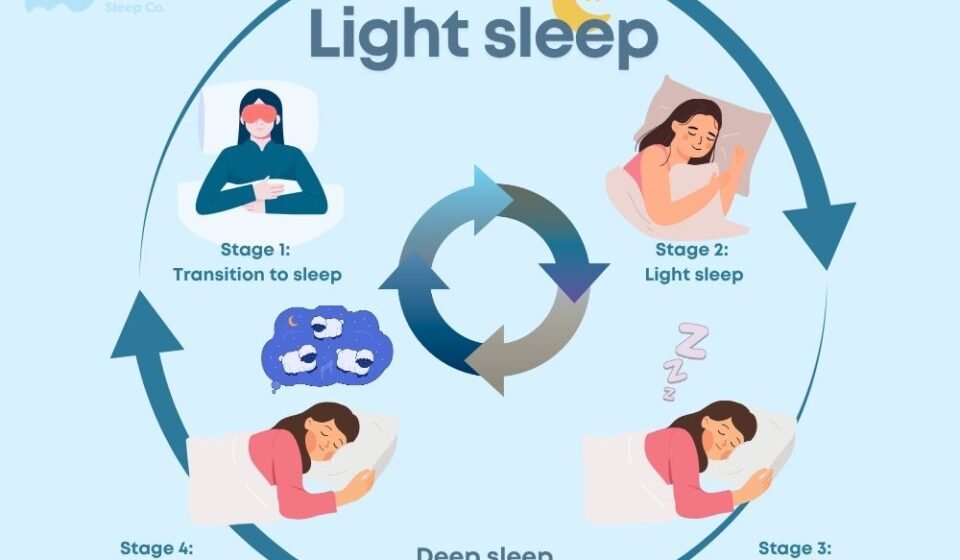
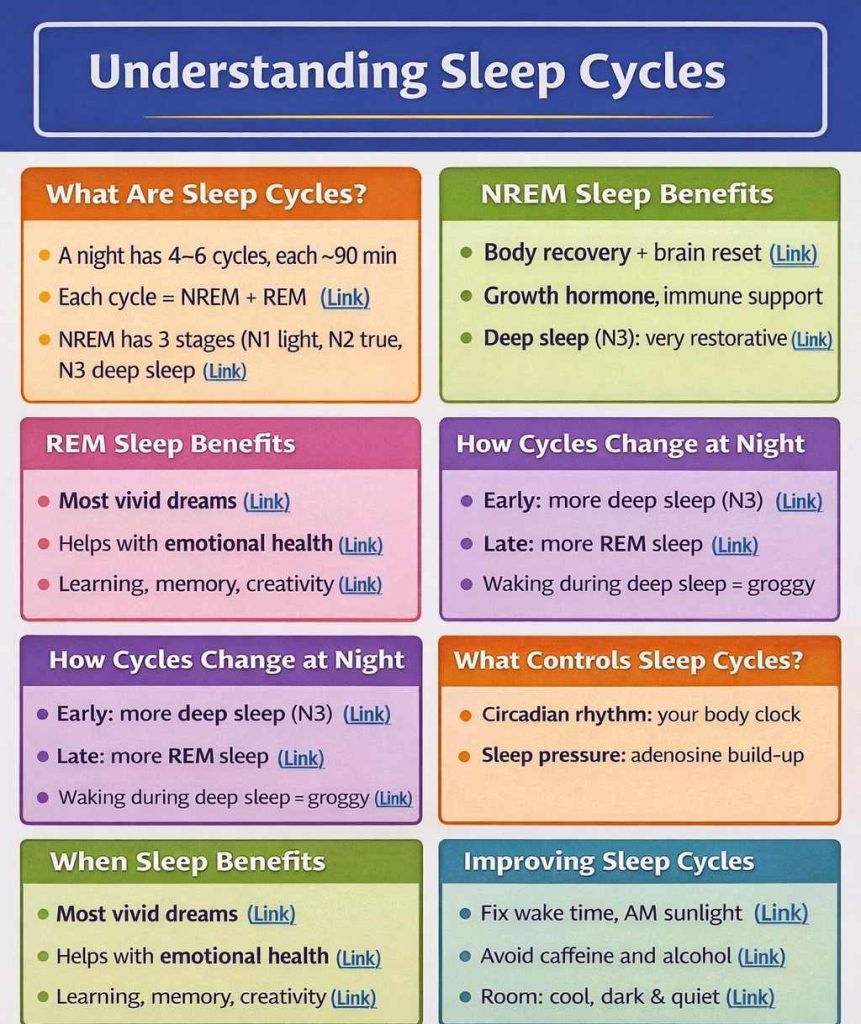
A sleep cycle is a recurring pattern that progresses through different sleep stages, lasting approximately 90 minutes on average, though this can range from 70 to 110 minutes. Over a typical night, an adult will experience four to six such cycles. These cycles are broadly divided into two primary types of sleep: Non-Rapid Eye Movement (NREM) and Rapid Eye Movement (REM) sleep.
Non-REM Sleep: The Body’s Repair Phase
NREM sleep is further subdivided into three distinct stages, each characterized by progressively deeper levels of sleep and unique brain activity.
N1 (Light Sleep): This is the transition phase between wakefulness and sleep. It is a light sleep stage from which an individual can be easily aroused. During N1, muscle activity slows, and occasional, involuntary muscle twitches may occur.
N2 (True Sleep): This stage marks the onset of stable sleep. The body’s temperature drops, heart rate slows, and breathing becomes more regular. Brain activity shows characteristic patterns, including sleep spindles (brief, intense bursts of neuronal firing) and K-complexes (large, slow waves). These are believed to play a role in memory consolidation and maintaining sleep in response to external stimuli. N2 typically comprises the largest portion of total sleep time, often 45–55%.
N3 (Deep Sleep / Slow-Wave Sleep): This is the deepest and most restorative stage of NREM sleep. Characterized by slow, high-amplitude delta waves on an EEG, N3 is the stage from which it is most difficult to be awakened. It is during deep sleep that the body prioritizes physical recovery: growth hormone is released, supporting muscle repair and tissue growth, and the immune system is bolstered. This stage is critical for feeling physically refreshed upon waking.
REM Sleep: The Mind’s Processing Phase
REM sleep is a paradoxical state where brain activity closely resembles that of an awake, alert brain. It is defined by several key features:
Rapid Eye Movements: As the name suggests, the eyes move quickly back and forth behind closed eyelids.
Muscle Atonia: The body’s major voluntary muscles are effectively paralyzed, a protective mechanism to prevent the physical acting out of dreams.
Vivid Dreaming: This is the stage where the most vivid, narrative, and emotionally charged dreams occur.
Cognitive Processing: REM sleep is essential for higher-order brain functions, including memory consolidation, learning, emotional regulation, and creative problem-solving.
The Evolving Landscape of the Night
Sleep cycles are not uniform throughout the night; their composition changes predictably. The first half of the night is dominated by deep sleep (N3) . This is why a significantly delayed bedtime can impair physical recovery, even if total sleep duration seems adequate. As the night progresses and sleep pressure decreases, REM sleep periods lengthen. The second half of the night is therefore REM-rich, which is why abruptly waking up early can disproportionately affect mood, memory, and emotional balance.
Waking up during a specific stage can also explain the feeling of sleep inertia—a state of grogginess, confusion, and impaired performance that can last for minutes to hours. This is most pronounced when awakening from deep sleep (N3).
The Biological Drivers of Sleep-Wake Cycling
Two primary biological systems govern the timing and structure of sleep:
Circadian Rhythm: This internal 24-hour body clock is orchestrated by the suprachiasmatic nucleus (SCN) in the brain. It regulates the timing of sleepiness and alertness and is strongly influenced by external light cues.
Sleep-Wake Homeostasis (Sleep Pressure): This system tracks the need for sleep. A chemical called adenosine builds up in the brain during wakefulness, creating increasing pressure to sleep. Caffeine promotes alertness not by providing energy, but by blocking adenosine’s receptors.
These systems are modulated by key hormones and neurotransmitters:
Melatonin: A hormone that signals “nighttime” to the brain, helping to align the circadian rhythm with the external environment.
Cortisol: This hormone naturally rises in the early morning hours to promote wakefulness and prepare the body for the day.
GABA (Gamma-aminobutyric acid): A calming neurotransmitter that helps initiate and maintain sleep.
Orexin (Hypocretin): A neurotransmitter that promotes wakefulness and stabilizes sleep-wake states; its deficiency is linked to narcolepsy.
Practical Implications for Optimizing Sleep
Improving sleep is not just about increasing the number of hours in bed, but about enhancing the quality and structure of the cycles within those hours. Common misconceptions can undermine these efforts. For instance, while alcohol may hasten sleep onset, it significantly suppresses REM sleep and leads to fragmentation later in the night.
To foster healthier sleep cycles, evidence-based recommendations include:
Maintain a Consistent Wake Time: This anchors the circadian rhythm and promotes regular sleep onset.
Prioritize Morning Light Exposure: Viewing sunlight within 30-60 minutes of waking is the most powerful cue for setting the body clock.
Manage Caffeine Intake: Avoid caffeine 8-10 hours before bedtime to prevent it from blocking adenosine receptors and disrupting sleep architecture.
Optimize the Sleep Environment: A cool, dark, and quiet room is conducive to uninterrupted sleep cycles.
Protect the Late-Night Sleep: The final 2-3 hours of sleep are critical for REM-rich sleep. Safeguarding this period supports emotional and cognitive health.
In conclusion, understanding sleep as a dynamic interplay of distinct cycles reveals its true complexity and profound importance. By aligning our habits with this biological architecture, we can move beyond simply “getting enough sleep” to achieving genuinely restorative and high-quality rest.
References (based on source material):
National Heart, Lung, and Blood Institute. (n.d.). Sleep. Retrieved from nhlbi.nih.gov
National Center for Complementary and Integrative Health. (n.d.). Melatonin: What You Need To Know. Retrieved from nccih.nih.gov
National Institute on Aging. (n.d.). Sleep. Retrieved from nia.nih.gov
National Institutes of Health. (n.d.). How sleep clears the brain. Retrieved from nih.gov
Sleep Foundation. (n.d.). Stages of Sleep. Retrieved from sleepfoundation.org
Sleep Foundation. (n.d.). How Sleep Works. Retrieved from sleepfoundation.org
Sleep Foundation. (n.d.). Adenosine and Sleep. Retrieved from sleepfoundation.org
Sleep Foundation. (n.d.). Caffeine and Sleep. Retrieved from sleepfoundation.org
Sleep Foundation. (n.d.). Alcohol and Sleep. Retrieved from sleepfoundation.org
Sleep Foundation. (n.d.). Dreams. Retrieved from sleepfoundation.org
Sleep Foundation. (n.d.). How Accurate Are Sleep Trackers? Retrieved from sleepfoundation.org
Sleep Foundation. (n.d.). Exercise and Sleep. Retrieved from sleepfoundation.org
Sleep Foundation. (n.d.). Teens and Sleep. Retrieved from sleepfoundation.org
Harvard Health Publishing. (n.d.). Sleep and mental health. Retrieved from health.harvard.edu
American Psychological Association. (n.d.). Stress and Sleep. Retrieved from apa.org
Centers for Disease Control and Prevention. (n.d.). How Much Sleep Do I Need? Retrieved from cdc.gov
NCBI Bookshelf. (n.d.). Physiology, Sleep Stages. Retrieved from ncbi.nlm.nih.gov
NCBI PMC. (n.d.). Sleep Spindles: Mechanisms and Functions. Retrieved from ncbi.nlm.nih.gov